<img height="1" width="1" alt="" style="display:none" src="https://www.facebook.com/tr?id=808984019221058&amp;ev=PixelInitialized">

Answer Engine Optimization (AEO) 

The Complete Guide for B2B Revenue Teams

AI platforms like ChatGPT, Gemini, Perplexity, and Google AI Overviews are changing how buyers discover and evaluate vendors. Learn how Answer Engine Optimization (AEO) helps your brand get cited, recommended, and trusted in AI-generated answers—and how revenue teams can turn AI visibility into measurable pipeline impact.

The Search Landscape Has Changed

For the last decade, getting found online meant ranking in search.

Marketers built entire growth engines around SEO—targeting keywords, publishing content, earning backlinks, and driving traffic through search engine results pages. It worked. And for many organizations, it still does.

But the way buyers discover information is changing quickly.

Today’s buyers are increasingly turning to AI platforms like ChatGPT, Gemini, Perplexity, Microsoft Copilot, and Google AI Overviews to ask questions, evaluate vendors, and make purchasing decisions.

Instead of browsing through pages of search results, buyers receive synthesized recommendations and direct answers.

A few brands are mentioned. Most are not.

The Shift Is Already Happening at Scale

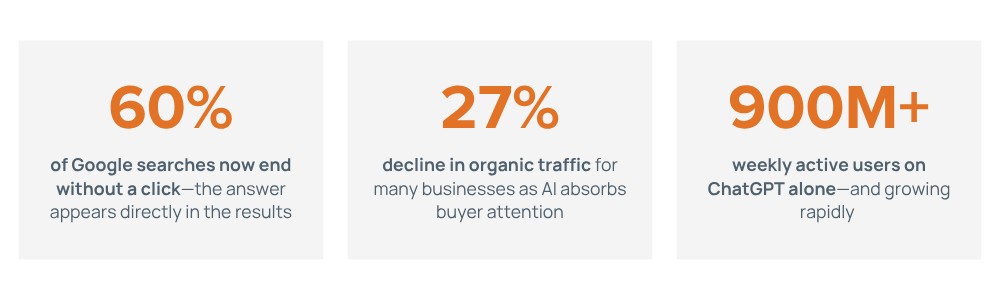
  • 60% of Google searches now end without a click
  • 27% decline in organic traffic for many businesses as AI absorbs buyer attention
  • 900M+ weekly active users on ChatGPT alone

This shift is fundamentally changing how buyers research and evaluate solutions.

When buyers ask AI a question, they often do not browse through multiple websites.

They get an answer. They trust it. They move forward.

That changes how brands earn visibility online.

LG2_Pillar page_guide to aeo_2

What Is Answer Engine Optimization (AEO)?

Answer Engine Optimization (AEO) is the process of improving how often—and how favorably—your brand appears in AI-generated answers from platforms like ChatGPT, Gemini, Perplexity, and Google AI Overviews.

Instead of competing only for rankings in traditional search engines, AEO helps your business become part of the answer itself.

In practical terms, AEO helps your business:

  • Show up when buyers ask AI for recommendations
  • Increase visibility in conversational search experiences
  • Build authority across AI-driven discovery platforms
  • Improve trust and buyer confidence before a website visit even happens

For B2B organizations, AEO is quickly becoming a critical extension of SEO, content strategy, and revenue enablement.

What Is AEO in Simple Terms?

AEO helps your brand get recommended by AI.

Traditional SEO helps your website rank in search engines.

AEO helps AI systems understand:

  • who you are
  • what you do
  • why you are credible
  • and when your brand should be recommended to buyers

As conversational AI becomes more integrated into search and discovery, brands that improve AI visibility are more likely to influence buyers earlier in the decision-making process.

What’s the Difference Between SEO and AEO?

SEO helps your website rank in search results.

AEO helps your brand get cited directly in AI-generated answers.

SEO focuses on clicks and rankings.
AEO focuses on visibility, recommendations, authority, and conversational discovery.

Organizations investing in both SEO and AEO are better positioned for the future of AI-driven search and buyer behavior.

AEO vs. SEO: What’s Changed?

Traditional SEO Answer Engine Optimization
Optimize for rankings Optimize for AI-generated answers
Measure clicks and impressions Measure visibility and share of voice
Focus primarily on your website Build authority across the digital ecosystem
Compete for traffic Compete to become the recommendation
Optimize for search engines Optimize for AI interpretation


SEO still matters.

But buyers are increasingly forming opinions before they ever click a website link. AEO helps brands influence that earlier stage of discovery.

Why AEO Matters Right Now

The shift toward AI-driven discovery is already impacting every stage of the buyer journey.

Organizations that establish AI visibility early are likely to build long-term competitive advantages as conversational search and AI-generated answers continue to grow.

AI Discovery Is Already Influencing B2B Buying Decisionsman smiling over orange background square

AI-generated search experiences are changing how buyers:

  • Research vendors
  • Compare software
  • Evaluate service providers
  • Validate recommendations
  • Shortlist solutions
  • Make purchasing decisions

Instead of reviewing multiple websites, buyers increasingly rely on synthesized AI-generated answers.

That means visibility is no longer determined solely by rankings.

It’s determined by whether AI systems trust your brand enough to recommend it.

Why Is AEO Important for B2B Companies?

AEO is important for B2B companies because buyers are increasingly using AI platforms to research vendors and make purchasing decisions before visiting websites or speaking with sales teams.

If your brand is not being cited in AI-generated answers, competitors may be shaping buyer perception before your sales process even begins.

AEO helps B2B organizations:

  • Improve AI visibility
  • Build digital authority
  • Increase qualified traffic
  • Strengthen buyer trust
  • Influence earlier stages of the buying journey

Higher-Quality Traffic

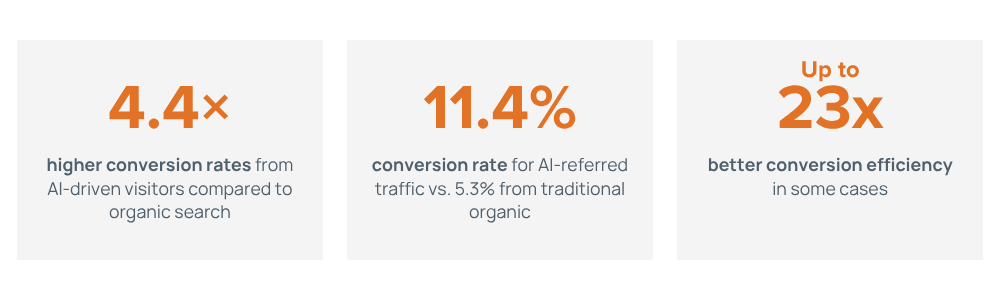
AI-referred visitors often arrive with more context and stronger purchase intent because AI has already filtered and evaluated options for them.

Research cited in the full guide shows:
LG2_pillar page_guide to AEO

AI visibility is not just about traffic volume.

It’s about attracting more qualified buyers.

Your Competitors Are Already Being Recommended

Every day, buyers are asking AI:

  • Which vendors they should evaluate
  • Which platforms integrate best
  • Which agencies are trusted
  • Which solutions fit their business needs

If competitors are consistently being named and your brand is not, those opportunities may never reach your pipeline.

Most organizations currently have no visibility into:

  • Which prompts trigger competitor mentions
  • How AI describes their brand
  • Why competitors are outranking them in AI-generated answers

That creates one of the biggest emerging blind spots in B2B marketing and revenue strategy.

Early Movers Will Compound Advantage

We have seen this before with SEO.LG2_guide to aeo_10

The organizations that invested early did not just gain traffic. They built long-term authority that compounded over time.

AEO is following a similar trajectory.

The signals AI learns from today—your content, reviews, mentions, expertise, and authority—will influence recommendations tomorrow.

Waiting does not just delay progress.

It makes catching up harder.

AI Visibility Is Becoming a Revenue Enablement Issue

The rise of AI-driven discovery is not just changing marketing.

It is reshaping how revenue is generated.

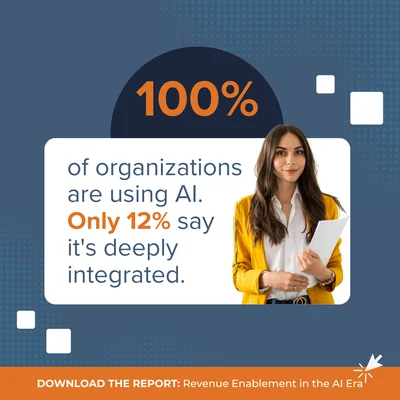
In LeadG2’s Revenue Enablement in the AI Era study, every organization reported using or piloting AI, yet only 12% describe it as deeply integrated into daily workflows.

That gap matters.

Because AI does not fix broken systems.

It amplifies them.

  • If messaging is inconsistent, AI scales that inconsistency
  • If systems are disconnected, AI insights remain siloed
  • If positioning is unclear, AI will not confidently recommend your brand

When buyers ask AI for guidance, they do not see your org chart.

They experience your brand as one unified signal.

That is why AEO is not just a marketing tactic.

It is a revenue enablement strategy.

What We’re Seeing in the AI Era

Through LeadG2’s research and work with B2B revenue teams, one theme continues to emerge:

AI amplifies alignment problems.

Organizations struggling with disconnected systems, inconsistent messaging, or siloed teams often see those same issues reflected in AI visibility and buyer experience.

Messaging Is the Biggest Risk—and Opportunity3-May-18-2026-09-18-16-2706-PM
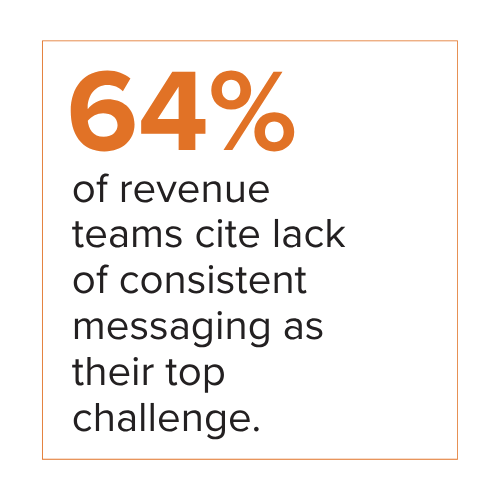
64% of revenue teams cite inconsistent messaging or playbooks as a top challenge.

When messaging varies across:

  • Website content
  • Sales conversations
  • Social channels
  • Third-party mentions

AI systems reflect that inconsistency back into the market.

The brands most likely to succeed in AI-driven discovery are often the organizations with the clearest and most consistent positioning.

AI Adoption Is Widespread—but Shallow

100% of organizations report using AI in some capacity, yet only 12% have deeply integrated it into workflows.
Many teams are experimenting with AI tools.

Far fewer have operationalized AI as part of:

  • Revenue strategy
  • Content strategy
  • Buyer journey optimization
  • Sales enablement
  • Revenue operations

Without structure, AI becomes a tool—not a strategic advantage.

Data Trust Is a Hidden Differentiator

Only 27% of organizations report strong confidence in their CRM and AI data.

Without reliable data:

  • AI insights become less actionable
  • Personalization weakens
  • Recommendations become inconsistent
  • Teams lose trust in AI-driven decision-making

Organizations with strong CRM alignment and cleaner systems are often positioned to perform better in AI-driven visibility and buyer engagement.

Execution Gaps Are Slowing Progress

LeadG2’s research also revealed significant disconnects between executive perception and front-line execution.

Executives are far more likely to believe systems are aligned than the teams using them daily.

That gap often shows up in:

  • Inconsistent buyer experiences
  • Fragmented messaging
  • Disconnected reporting
  • Weak AI visibility signals

The Biggest AEO Mistake B2B Companies Are Making

Many organizations are treating AEO as simply another SEO tactic.

But AI visibility problems are often operational problems.

The organizations performing best in AI-driven discovery are typically the organizations with:LG2_guide to aeo_11

  • Strong revenue alignment
  • Clear messaging governance
  • Connected CRM systems
  • Consistent content strategy
  • Structured enablement processes

AI does not create alignment.

It exposes whether alignment already exists.

How AI Platforms Choose Which Brands to Recommend

AI platforms evaluate patterns of trust and authority across the web.

They do not simply rank websites the same way traditional search engines do.

Instead, AI systems analyze signals including:

  • Content quality and specificity
  • Consistency of brand messaging
  • Third-party mentions
  • Reviews and ratings
  • Structured content formats
  • Industry authority
  • Engagement across digital channels
  • Relevance to the user’s question

Brands that appear consistently across trusted sources are more likely to be cited in AI-generated answers.

How AEO Works

AI answer engines synthesize information from a broad ecosystem of sources:

  • Website content
  • FAQ pages
  • Comparison pages
  • Reviews and ratings
  • Third-party publications
  • Community discussions
  • Reddit conversations
  • Social media content
  • Press mentions
  • Case studies
  • Thought leadership

The brands that appear consistently—and credibly—across these sources are the brands AI is most likely to recommend.

That means AEO is not simply a content strategy.

It is a visibility, authority, and revenue alignment strategy.

The Five Pillars of an Effective AEO Strategy
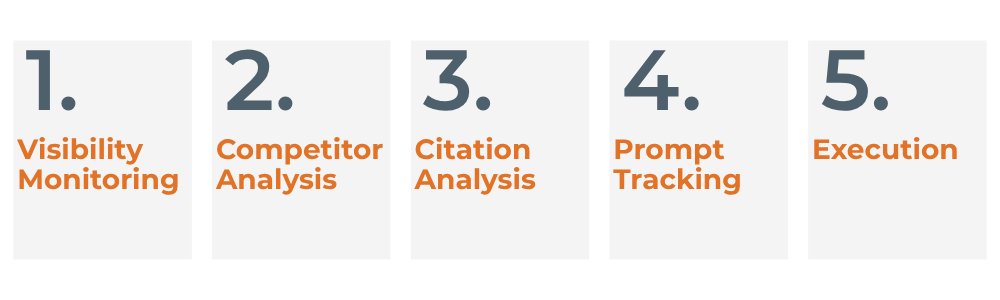
5 Pillars of Effective AEO Strategy

1. Visibility Monitoring

Track how often your brand appears across AI-generated answers from platforms like ChatGPT, Gemini, and Perplexity.

Visibility monitoring helps organizations understand:

  • Which prompts trigger brand mentions
  • How AI describes the brand
  • Where visibility gaps exist
  • How visibility changes over time

2. Competitor Analysis

AEO is inherently competitive.

Organizations need visibility into:

  • Which competitors are being recommended
  • Which prompts competitors dominate
  • Which authority signals are influencing those recommendations

Understanding competitor share of voice helps prioritize optimization opportunities.

3. Citation Analysis

AI-generated answers are shaped by the sources AI systems trust.

Citation analysis helps identify:

  • Which domains AI references most often
  • Which content formats influence recommendations
  • Which authority sources matter most in your industry

This helps organizations prioritize where to build authority and visibility.

4. Prompt Tracking

Prompts are the actual questions buyers ask AI.

Examples include:

  • “What’s the best CRM for B2B companies?”
  • “Who are the top HubSpot partners?”
  • “What is the best revenue enablement strategy?”

Tracking prompt-level visibility helps organizations understand where they are winning—and where they are invisible.

5. Execution

Visibility data only matters if organizations act on it.

Strong AEO execution often includes:

  • Creating FAQ content
  • Publishing research and thought leadership
  • Optimizing comparison pages
  • Expanding third-party visibility
  • Improving structured content
  • Building consistent messaging across channels

The strongest AEO programs integrate directly into ongoing content and revenue strategies.

What Types of Content Perform Best in AI Search?

The content most likely to be cited in AI-generated answers is:

  • Specific and niche-focused
  • Structured with clear headings and formatting
  • Directly answers buyer questions
  • Supported by data or examples
  • Published consistently
  • Reinforced across multiple trusted sources

FAQ pages, comparison pages, research reports, educational guides, and thought leadership content tend to perform especially well.

What Good AEO Content Looks Like

AI systems favor content that is:

SpecificLG2-guide to aeo_12

Detailed, niche-focused content tends to outperform broad overview pages.

Structured

Clear headings, lists, FAQs, and definitions make it easier for AI systems to interpret information accurately.

Direct

The best AEO content answers buyer questions clearly and efficiently.

Credible

Original research, customer stories, case studies, and trusted third-party validation strengthen authority signals.

Consistent

AI builds understanding across multiple digital touchpoints—not just your website.

How to Measure AEO Success

AEO performance should connect directly to revenue outcomes—not vanity metrics.

Core AEO Metrics

Metric What it Measures
Brand Visibility Score How often your brand appears in AI-generated responses
Share of Voice Visibility relative to competitors
Sentiment Score How positively or negatively AI describes your brand
Prompt-Level Visibility Which buyer questions your brand appears for
Citation Sources Which trusted sources influence recommendations
AI Referral Traffic Traffic arriving from AI-driven platforms
AI Referral Conversion Rate How effectively AI-driven traffic converts


Connecting Visibility to Revenue Performance

Most organizations prioritize metrics like:

  • Conversion rates
  • Win rates
  • Sales cycle length

But far fewer measure buyer experience.

In LeadG2’s research, only about 12% track buyer satisfaction metrics.

That creates a major feedback gap.

AEO should support:

  • Better buyer confidence
  • Higher-quality pipeline
  • Faster decision-making
  • Improved conversion efficiency
  • More trusted buyer experiences

How to Get Started with AEO

AEO programs do not require massive overhauls before they provide value.

The fastest path forward is:

  1. Establish visibility
  2. Understand the gaps
  3. Build a focused strategy
  4. Continuously optimize

Common First Steps in an AEO Strategy

Phase 1: Establish Visibility

  • Track AI visibility across key prompts
  • Identify competitor citations
  • Establish baseline visibility metrics
  • Evaluate AI sentiment

Phase 2: Understand the Gap

  • Audit citation sources
  • Identify missing visibility opportunities
  • Evaluate AI-generated narratives
  • Review authority signals

Phase 3: Build the Strategy

  • Optimize FAQ content
  • Create educational pillar pages
  • Improve comparison content
  • Expand third-party visibility
  • Strengthen structured content

Frequently Asked Questions

Download the Complete Guide to AEO

Get the full Guide to AEO send to your email:

  • Expanded AEO strategy frameworks

  • AI visibility recommendations

  • Revenue alignment insights

  • Content optimization guidance

  • AEO implementation checklists

DOWNLOAD THE COMPLETE GUIDE TO AEO

Explore the Research Behind the Strategy

LeadG2’s Revenue Enablement in the AI Era report reveals how sales and marketing teams are adopting AI, where alignment gaps remain, and what organizations must do to stay competitive in AI-driven discovery.